
What if the key to feeling better isn’t just what you put into your body, but what you’re still carrying within it?
BY ANU ABRAHAM, DPT, Somatic Healer

Your subconscious can hold emotions, memories, beliefs, trauma, and habitual patterns that continue to influence how you think, feel, and respond—often without your conscious awareness.
When these experiences remain unresolved, they can create stagnation in the body—physically, emotionally, and energetically. Think of it as a “roadblock to flow.” When the body is under prolonged stress, circulation and nervous system regulation can be affected, and inflammation, tension, and pain may develop or persist.
The body is constantly communicating with us. Sometimes, what we experience physically is connected to what we have been carrying emotionally for years.
Somatic healing is about slowing down, tuning into the body, and becoming aware of what may be underneath what we are experiencing. By bringing awareness to these deeper patterns and consciously creating space to release them, we can support the nervous system, reconnect with the body, and cultivate greater health and well-being.
The good news is that these patterns can change.
If you’re ready to explore a deeper level of healing and prevention, I invite you to experience a personalized session focused on releasing what your body may be holding and creating space for something new.
Sometimes healing begins with letting go of what your body has been holding in its tissues.
What is SOMATIC HEALING: Intuitive listening, Intuitive Bodywork, Somatic Tissue Release, Energy Work/Medicine, Visceral Manipulation, Breathwork, Various Physical Therapy Techniques, Guided Meditations, and Visualization.
BOOK A SOMATIC HEALING SESSION HERE!
Leaky gut…the root behind many chronic issues
What Is Leaky Gut?
By Harli, Intern at The Well Center
Hi everyone! I’m Harli, Michele Zipper’s intern at The Well Center. One concept that seems to come up for many of our clients is something called “leaky gut,” also known as intestinal mucosal barrier dysfunction.
When I first started, I thought a leaky gut simply meant the body wasn’t absorbing nutrients. But after sitting in on client sessions and doing more research, I’ve realized there’s much more to it. Below, I explain what the intestinal mucosal barrier is, how leaky gut happens, and why it matters for your health.
What is the Intestinal Mucosal Barrier?
The intestinal mucosal barrier is a vital part of both the digestive and immune systems. It’s made up of a thin layer of epithelial cells that line the gut—especially in the small intestine, where most nutrient absorption and immune activity takes place.
These cells are tightly packed together to form a protective barrier. They allow essential nutrients to be absorbed into the body while blocking harmful substances like bacteria, toxins, parasites, and undigested food particles from entering the bloodstream.
But the barrier doesn’t just rely on its physical structure—it also has a chemical defense system. One key part of this system is secretory IgA (SIgA), a specialized antibody produced just beneath the surface. SIgA helps neutralize pathogens and toxins before they can cause harm.
Together, these physical and chemical defenses work around the clock to protect your body from whatever comes in through your food, drinks, and even the air you breathe.
The Role of Villi
The villi—tiny, finger-like projections in the small intestine—play a big role here, too. They increase the surface area for absorption and help transport nutrients into the bloodstream. Healthy villi are essential for effective digestion and a strong gut barrier.
What Damages the Mucosal Barrier?
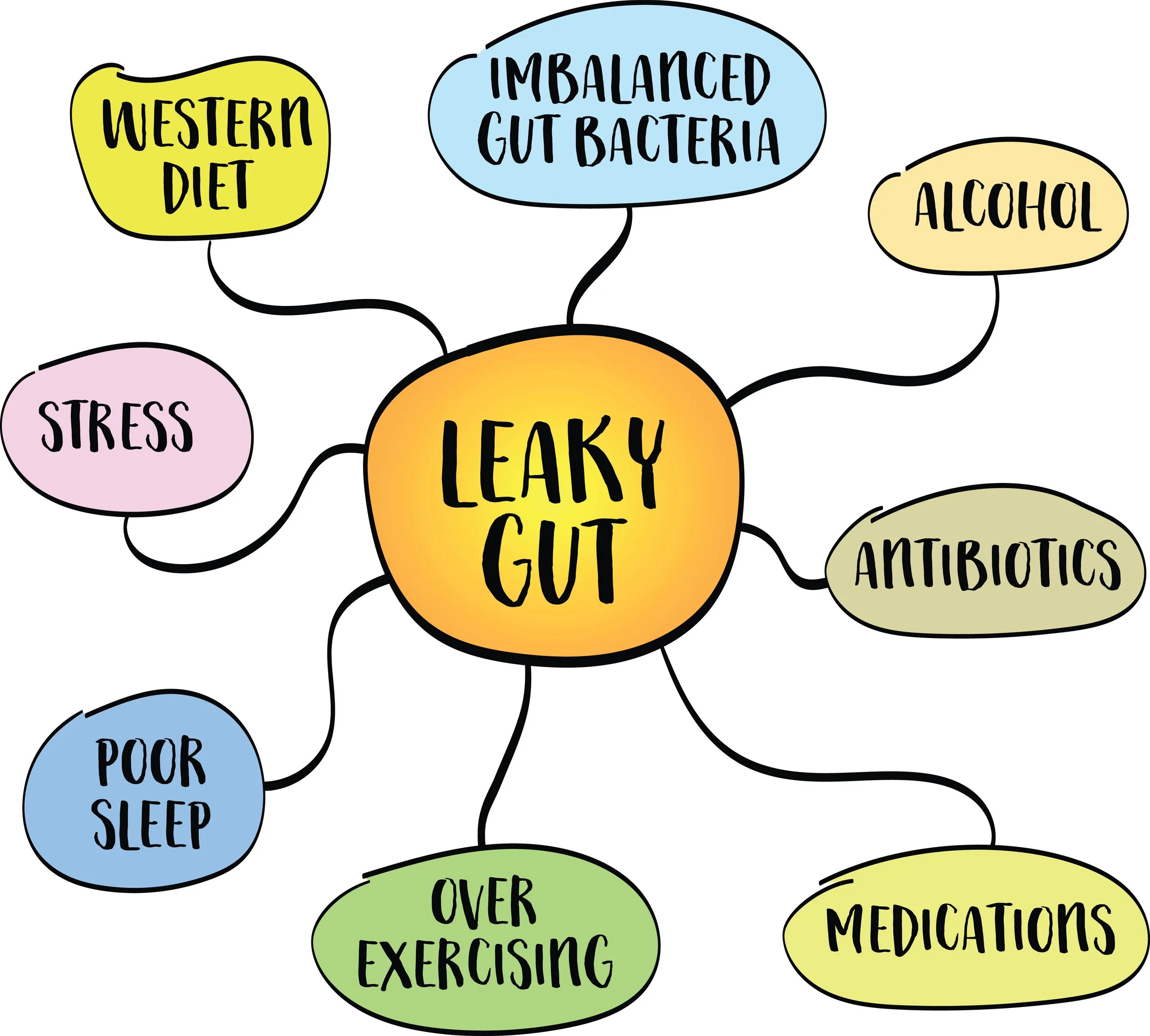
Unfortunately, this barrier can be weakened by a number of common stressors, including:
Chronic inflammation from infections or food sensitivities
Dysbiosis—an imbalance in gut bacteria (something Michele often discusses in sessions)
Diets high in processed foods, gluten, alcohol, and additives
Antibiotics and other medications
Chronic stress
Environmental toxins like pesticides or mold
These factors can damage the tight junctions between epithelial cells, increasing the gut’s permeability.
What Is Leaky Gut?
Leaky gut occurs when the intestinal barrier becomes too permeable—essentially, when the “gates” between cells open too much. This allows harmful substances to “leak” into the bloodstream.
Once these substances enter the bloodstream, they can travel throughout the body, triggering immune responses and inflammation. Over time, this can lead to a wide variety of health issues, including:
Autoimmune conditions
Food allergies
Skin problems
Brain fog
Fatigue
Digestive disorders
How to Support a Healthy Gut
This is where Michele’s expertise comes in. If you’re experiencing symptoms related to leaky gut, she can help you create a personalized plan to support healing. This may include:
A whole-food, anti-inflammatory diet
Identifying and reducing food sensitivities
Targeted supplements
Supporting your microbiome with probiotics and fermented foods
Managing stress
Reducing exposure to toxins and unnecessary medications
In Conclusion
Protecting your intestinal mucosal barrier is one of the most important steps you can take for your long-term health. Your digestion, immune system, energy levels, and even your mental clarity depend on it. So ask yourself—how’s your gut doing?
Hopefully, not too leaky! 😉
—Harli
Intern @ The Well Center